
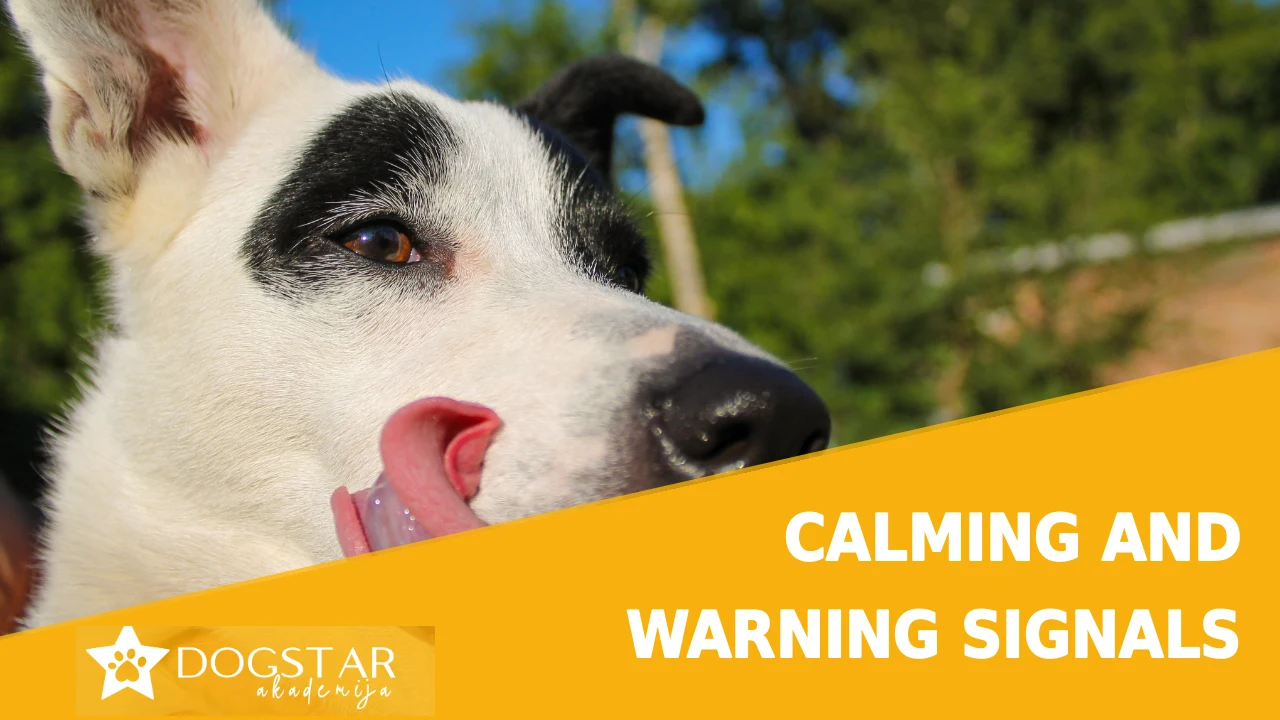
Calming and Warning Signals in Dogs
Dogs also communicate through calming and warning signals. If we do not know these signals or overlook them, problems can arise. And if we punish a dog for communicating something to us (for example, by growling), it can even lead to a bite. In an uncomfortable, frightening or threatening situation, the dog may bite “without warning” because we have taught them not to growl.
Conflicts are dangerous – they cause injuries. It is natural for dogs to avoid them.
Dogs are very good at noticing even small changes and details – for example, sounds, smells, subtle changes in another individual's behaviour, facial expressions and eye contact. Dogs naturally avoid conflict. That is why they have developed many signals to show others that they are not dangerous and to calm someone who is uncertain, frightened or aggressive.
Problems can arise when we fail to recognise or overlook a dog's calming signals, or even punish the dog for using them.
We can do a great deal of harm this way. Some dogs stop using these signals when communicating with other dogs. Others become so frustrated that nervousness and aggressive outbursts may follow.
If the signals do not make the unpleasant situation stop (the other dog moving away, a change in the situation or an end to the discomfort), the dog may resort to attacking. This often happens when the dog cannot escape, for example when on a lead, in a confined space, or when they feel unable to move away.
CALMING SIGNALS
“I come in peace!”
Consider the situation and your individual dog – these may be calming signals, but they may not be!
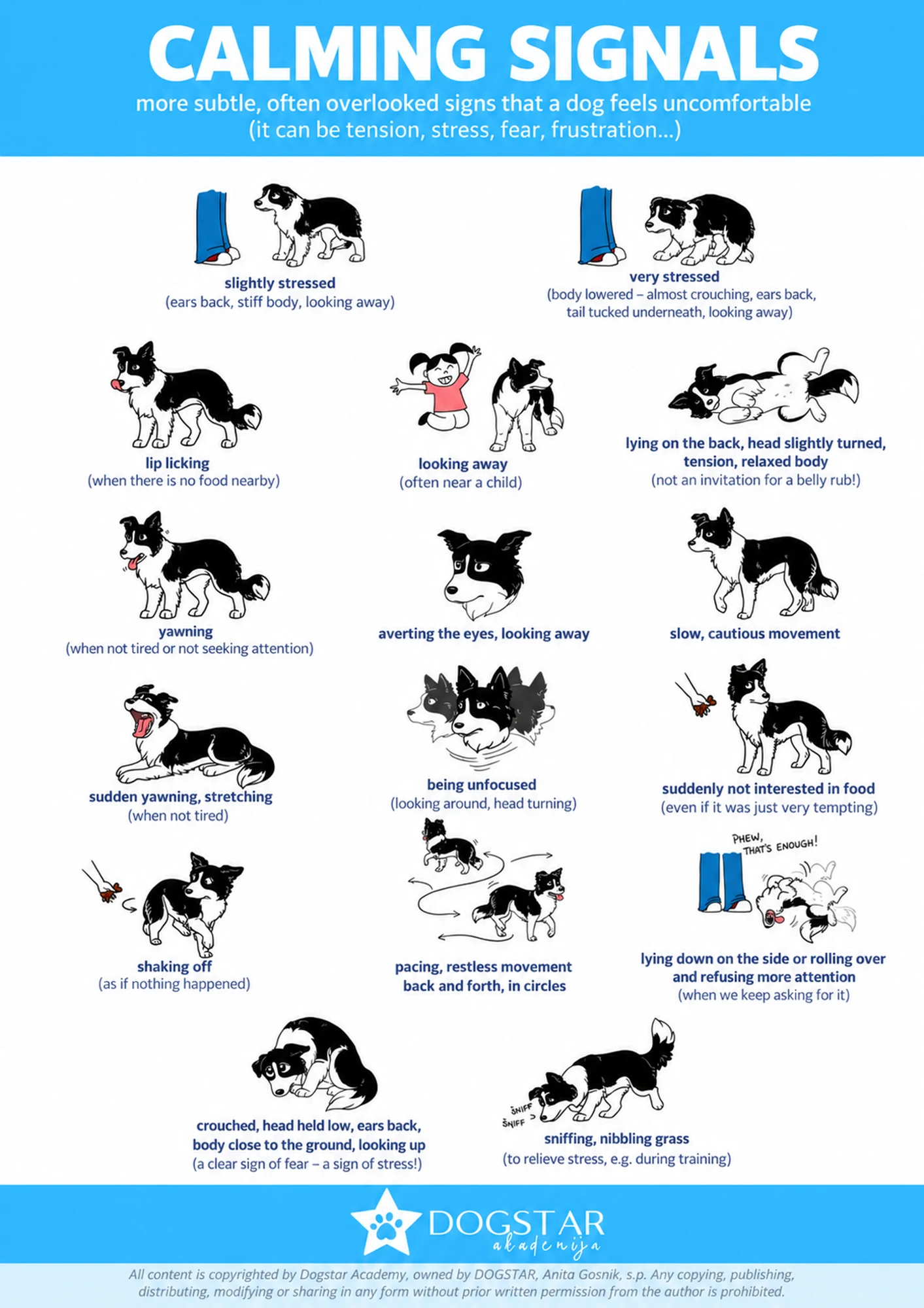
Yawning
Licking themselves or licking another dog
Turning away / turning the head
Play bowing
Sniffing the ground
Walking slowly
Freezing (for example, when escape is not possible)
Sitting down / lifting one paw
Walking in a curve
Other signals: “smiling”, lip smacking, tail wagging, urinating, a puppy-like facial expression, lying belly-down on the ground, or acting silly
Combinations and variations (depending on breed, individual dog and situation)
WARNING SIGNALS
“Leave me alone, stop that, go away, or else…!”
Consider the situation and your individual dog – these may be warning signals, but they may not be. If in doubt, act as though the dog is giving a threat or warning!
The dog becomes still, with weight shifted forward, a stiff and tense gait, and a motionless tail or short, abrupt tail movements
Staring into the other dog's eyes, eyes wide open, sometimes showing the whites of the eyes, furrowed brows
Raised and wrinkled muzzle, raised lips
Low or more pronounced growling, or warning barks
Lunging forward or approaching quickly in a straight line
Combinations and variations (depending on breed, individual dog and situation)