
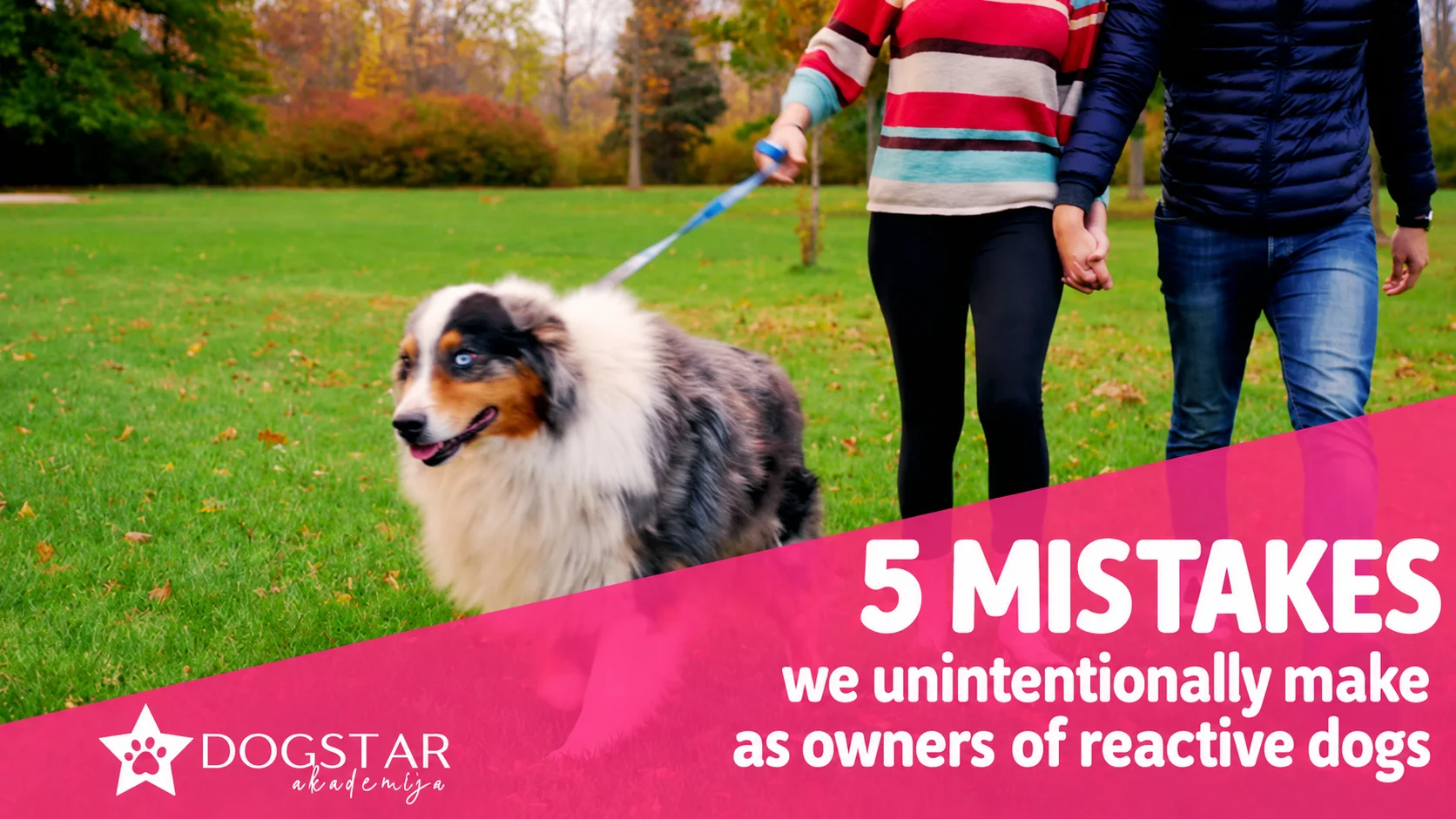
5 Mistakes We Unintentionally Make as Owners of Reactive Dogs
🎉 Download the brochure for the online programme REACTIVITY: Walks Without Drama (coming soon!) →
If you have a reactive dog, you are probably doing your very best. But reactivity is tricky. Often, it is not about what we deliberately do wrong, but about small, everyday mistakes we repeat out of a lack of knowledge, concern, or a desire to make things better as quickly as possible.
Below are five of the most common mistakes I see when working with reactive dogs—and why they can slow progress in the long run.
1. We try to “get the dog used to it” by exposing them to triggers
One of the most common thoughts is:
“They’ll get used to it if they see other dogs often enough.”
In reality, the opposite often happens. When we repeatedly expose a dog to triggers beyond their tolerance threshold, their stress builds up and their reactions become faster and stronger.
A reactive dog cannot learn when overwhelmed. Learning happens when they still feel safe enough.
2. We notice warning signs too late
Most people only notice reactivity when a dog barks, growls or lunges on the lead. But the dog usually communicates that they are struggling long before that:
holding their breath
a stiff tail or body
turning their head away
walking unusually slowly or quickly
If we wait for an “outburst”, we have already missed the opportunity to move away calmly.
Learning to read subtle signs of stress is one of the most important skills for the owner of a reactive dog.
3. We unintentionally put more pressure on the dog
Statements such as:
“There’s nothing to worry about.”
“Look, that dog is friendly.”
are often meant to reassure us rather than the dog. The dog does not experience this pressure as reassurance, but as a signal that they must endure the situation, even when it feels uncomfortable.
When we force a dog to stay in a situation where they do not feel safe, they lose trust—in themselves and in us.
4. We focus only on behaviour, not emotions
Barking, growling and lunging are symptoms, not the underlying problem. If we try to stop only the behaviour (with commands, corrections or punishment) without addressing the emotion behind it, the dog will find another way to express their distress.
Reactivity often stems from:
fear
frustration
insecurity
previous negative experiences
Real progress happens when we work on how the dog feels, not just how they behave.
🎉 Download the brochure for the online programme REACTIVITY: Walks Without Drama (coming soon!) →
5. We compare our dog with other dogs
“That dog walks past completely calmly.”
“Why can’t mine do that?”
Every dog has their own history, genetics, experiences and limits. Comparisons often lead to:
feelings of failure
pressure on ourselves and our dog
unrealistic expectations
Progress with a reactive dog is not linear and is not always visible from the outside. Sometimes the biggest achievement is that the dog recovers more quickly or that a reaction is shorter.
Final thoughts
If you recognised yourself in any of these mistakes, it does not mean you are doing a bad job. It simply means you have a dog who needs more understanding, structure and compassion.
A reactive dog is not a project that needs to be “fixed”. They are an individual learning how to live in a world that is often too loud, too fast and too close.
🎉 Download the brochure for the online programme REACTIVITY: Walks Without Drama (coming soon!) →