
Is My Dog Reactive?
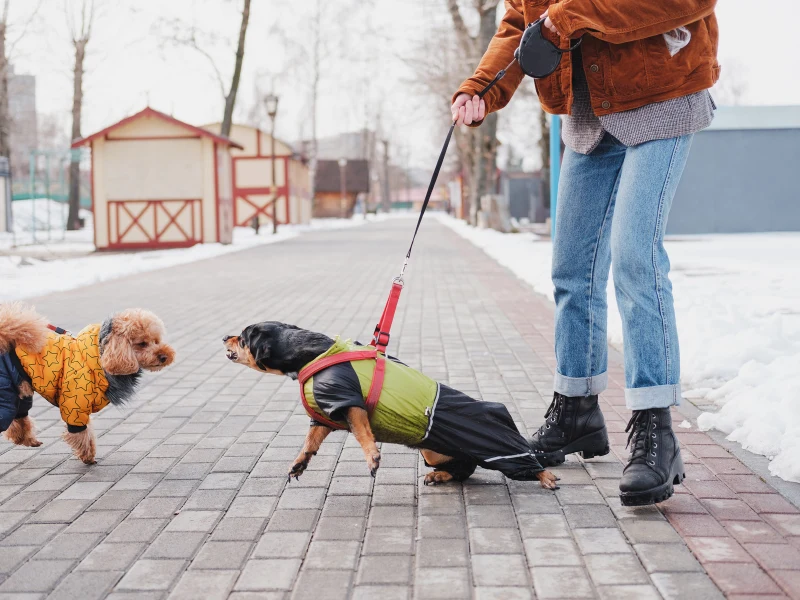
Do you also have a dog who barks at or lunges towards other dogs or people? Many owners come to me for behavioural consultations precisely because of this problem. Would you like to know what reactivity is, why it develops and how the problem can be addressed?
We increasingly come across expressions such as “reactivity” or “reactive dog” in dog parks, on forums and in Facebook groups. But what are we actually talking about here — a “new” behavioural problem, or simply a new term that we did not use before?
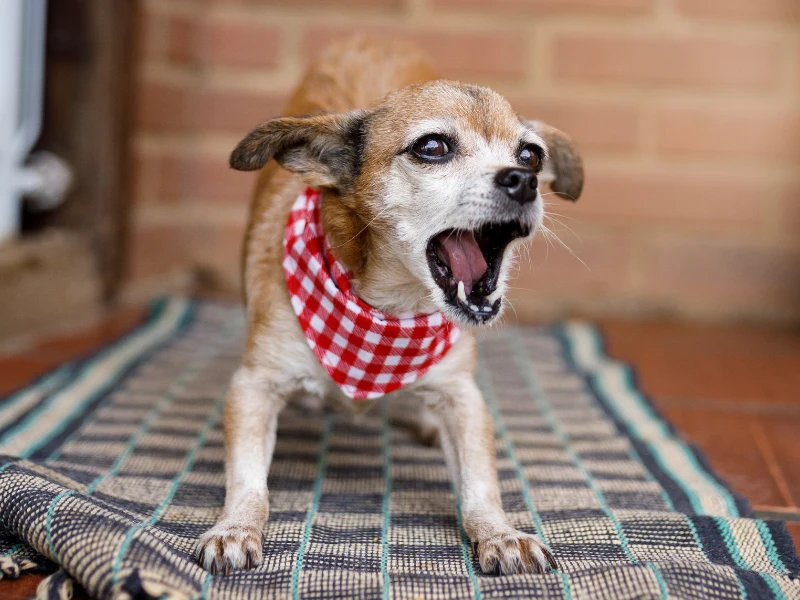
Dr Karen Overall says that reactivity is an excessively intense (abnormal) response to a normal stimulus.
In other words, a reactive dog responds too intensely to an ordinary stimulus. For example, when a dog hears a new sound, it is normal for the dog to listen and look towards where the sound is coming from, and perhaps bark. However, if the dog barks almost continuously for a long time, runs up and down in agitation, or starts spinning around near the source of the sound, we can say that the reaction is not normal (but abnormal), or that the dog is reactive. The fundamental criterion for identifying reactivity is therefore a disproportion between the stimulus and the change in the dog’s behaviour that it provokes.
🎉 Download the brochure for the online programme REACTIVITY: Walks Without Drama →
A whole range of behaviours and states may underlie reactivity:
excessive alertness and tension;
restlessness expressed through physical activity such as walking, running and jumping;
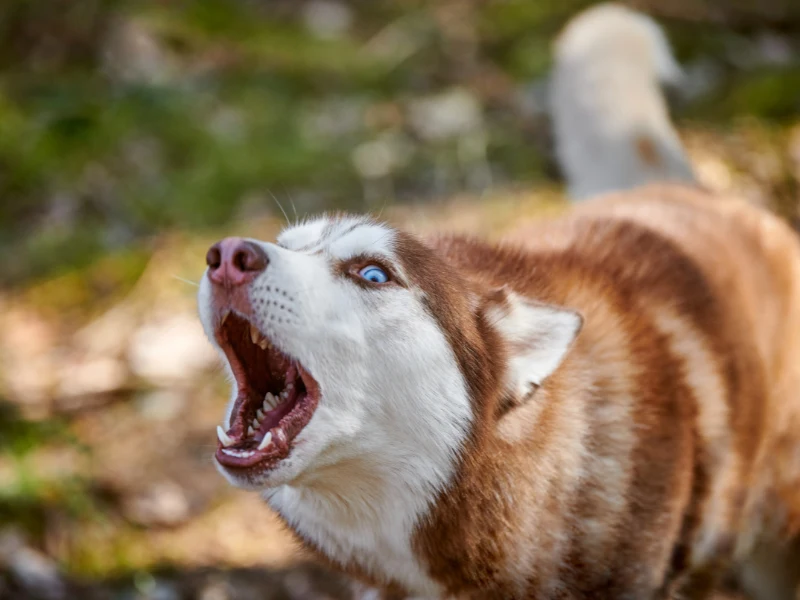
barking, whining and howling;
urination and defecation;
stereotyped behaviours (for example, chasing the tail).
When we compare reactive and non-reactive dogs, we notice that reactive dogs spend most of their time in a tense state. They are highly attentive to everything happening around them and often display warning behaviours, such as growling.
Non-reactive dogs, by contrast, are relaxed most of the time, interested in what is happening around them and rarely feel the need to give warnings. Although non-reactive dogs can also overreact to certain stimuli, such reactions are very rare for them, whereas they occur frequently in reactive dogs.
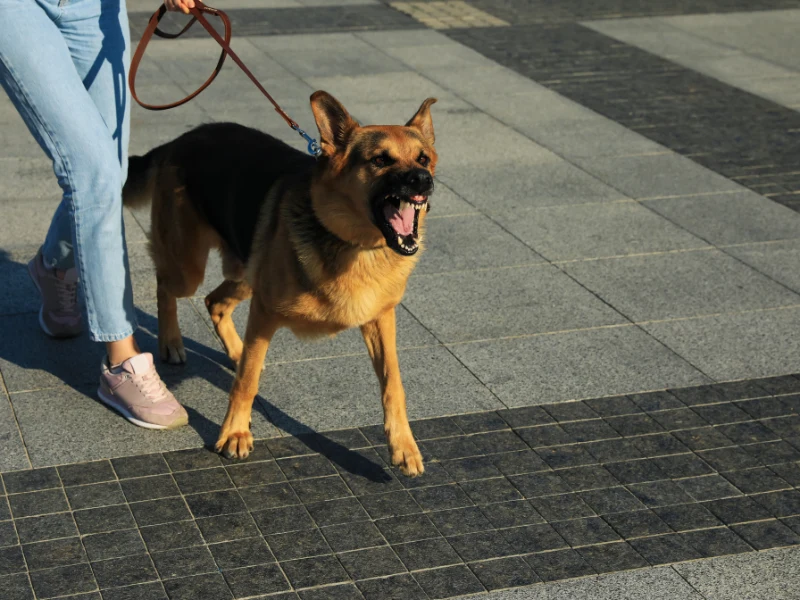
Owners of reactive dogs often describe their dogs as unpredictable. On one walk, for example, the dog may walk calmly past a cyclist without reacting, while on another walk the dog starts barking and lunging at a cyclist.
However, this behaviour is not unusual; quite the opposite, it is typical of reactive dogs. The reason is that the dog’s stress level rises after every situation that provokes an excessive reaction or a need to issue a warning, and it takes some time for that level to return to normal (baseline). Consequently, if the dog encounters several “problematic” situations within a short period, its threshold for reacting becomes lower with each situation. The dog becomes increasingly reactive, and walks become increasingly difficult for the owner.
It is therefore not surprising that on such “bad” days a dog reacts excessively even to stimuli that would not normally cause such a response. Dogs may overreact to many different things, but owners most often seek help for excessive reactions towards other dogs, unfamiliar people, cyclists, runners or various sounds.
Why Is My Dog Reactive?
When faced with reactivity in their dog, many owners ask themselves why their particular dog behaves this way. They most often look for causes in poor upbringing, insufficient discipline or dominance as a personality trait. The truth is that reactivity has much more specific — and complex — causes. Although it can be difficult to establish the exact causes in an individual case, there are usually several.
Dogs may have a genetic predisposition to developing problems rooted in reactivity. It is important to emphasise, however, that environmental factors are also needed for that genetic predisposition to manifest itself.
🎉 Download the brochure for the online programme REACTIVITY: Walks Without Drama →
Furthermore, numerous scientific studies show that prenatal and postnatal periods play an important role in shaping an individual’s future behaviour. For example, a mother dog’s exposure to stress during pregnancy also affects her puppies, which may subsequently be more likely to develop fearfulness, hyperactivity or learning difficulties.
Likewise, early separation from littermates and the security provided by the litter can have unwanted consequences for later behaviour. Research involving 140 dogs showed that puppies separated from their mothers at between one and one-and-a-half months of age were more prone to excessive barking, fearfulness on walks, reactivity to sounds and destructive behaviour than puppies separated from their mothers at eight weeks (Pierantoni et al., 2011).
Of course, negative experiences early in life — especially during the socialisation period — as well as later experiences can also cause a dog to react intensely in certain situations or when particular stimuli appear.
An Approach to Addressing the Problem
Behavioural problems based on reactivity require an individual approach. For that reason, attending (obedience) classes is NOT the right choice for owners dealing with this problem. Dogs that react intensely are often extremely aroused and irritable, which makes it difficult for them to concentrate and learn. The first step in addressing the problem must therefore involve approaches that help these dogs relax.
Above all, these are approaches that allow us to manage the stimuli to which dogs react: for example, walking in an arc and increasing the distance from unfamiliar people, cyclists and others before the dog starts showing reactive behaviour; using natural barriers during walks; and organising how unfamiliar visitors enter the home. The appropriate measures depend on the particular stimuli and situations involved.
Although managing the stimuli that provoke a reaction will not usually resolve reactivity on its own, it is an essential prerequisite for working to reduce it. During this work, techniques are commonly used to expose the dog gradually to stimuli (for example, another dog) in a controlled environment, but only at an intensity low enough not to provoke a reactive response. At the same time, depending on the dog’s emotional state, we may work on building pleasant associations, teaching acceptable behaviours, encouraging the use of communication signals and other strategies, according to what that individual dog needs to cope better with everyday life.
Because reactivity encompasses a whole range of behaviours shown by dogs in different situations — and because some approaches are mutually incompatible — it is important to work with each owner and dog individually. Advice and a plan for addressing the problem should be adapted as closely as possible to their needs and realistic circumstances. Although deliberately exposing a dog to stimuli that provoke reactive responses is often recommended, this does not help resolve the problem. In fact, it does the opposite: it raises stress levels and causes irritability and agitation, which in turn lowers the dog’s reaction threshold, so reactions become more frequent and more intense.
Among dog owners, and unfortunately even among some people who consider themselves experts, there is still a belief that punishing reactive behaviour can solve the problem. Although punishment may sometimes (temporarily) stop an unwanted behaviour, it should not be used because of the range of unwanted consequences it can have for the dog’s behaviour and emotional state.
Living With a Reactive Dog
Many online articles, books and DVDs describe techniques intended to help owners reduce their dogs’ reactivity in everyday situations. Very little, however, is published with the aim of supporting the owners of reactive dogs, who often ask themselves where they went wrong in raising their dog for it to react so intensely to ordinary situations.
As already mentioned, many factors influence a dog’s behaviour that you cannot control (you can read more about these factors in the article “It’s Always the Owner’s Fault! Or Is It?”). It is therefore possible that you have not made any mistake at all. It is also important to realise that your dog is not the only one with this problem, and probably not the most difficult case either. Without doubt, living with a reactive dog — and working to address the reactivity — requires daily involvement from the owner, adjustments to the dog’s current needs, and planning and careful organisation of completely ordinary situations: guests arriving at home, entering a lift when an unfamiliar person is inside, or simply going for a walk.
It is equally important to recognise that work on this problem often does not produce quick results. It may take several months, or even longer. During that time there will be very optimistic days, when you notice great progress, and less optimistic ones, when it seems as though you are almost back at the beginning. The important thing is to be objective and compare your dog’s behaviour now with its behaviour three months, six months or a year ago. If you see positive progress over that period, it is a sign that you are on the right track. A professional dog behaviour consultant can — and should — provide substantial support. Someone with sufficient knowledge and experience will explain which behavioural changes count as positive progress and what expectations are realistic in view of your dog’s current condition.
Because reactivity is an emotional problem, working on it — and on changing the dog’s emotional state — improves the dog’s quality of life. We should not forget that reduced reactivity and a greater ability to cope calmly with everyday situations also mean a more relaxed daily life for the owner and the whole family. From that perspective, this is certainly motivation enough to work with your reactive dog.
Article author: Igor Gaćeša, dog behaviour consultant
Translated into English by: Anita Gosnik
P.S. Interested in how to address reactivity? We have an online programme that opens once or twice a year: Walks Without Drama. Download the brochure:
🎉 Download the brochure for the online programme REACTIVITY: Walks Without Drama →